8 NordVPN customer reviews that actually cut through the noise in 2026
NordVPN customer reviews examined in 2026. What buyers consistently note, where satisfaction gaps appear, and how sentiment maps to features and pricing.
NordVPN reviews in 2026 reveal a stubborn paradox: strong protection and a vast server map, yet price friction that shows up outside promos. That tension matters for small businesses watching every dollar. NordVPN earns praise for reliability in long-haul connections, but critics flag churn on renewals, which skews sentiment when promos vanish.
This piece distills user voices across major sites and roams beyond hype to ID what actually moves perception this year. In 2026, Reviews consistently note that performance holds up in streaming and remote-work scenarios, while complaints cluster around pricing and occasional interface quirks. One recurring thread is value timing, promos matter as much as features. The goal is to map signal to noise, so readers can decide if NordVPN fits their risk tolerance, budget, and device count. This intro lays the groundwork for a data-backed synthesis of what real users are saying now.
The NordVPN customer reviews landscape in 2026
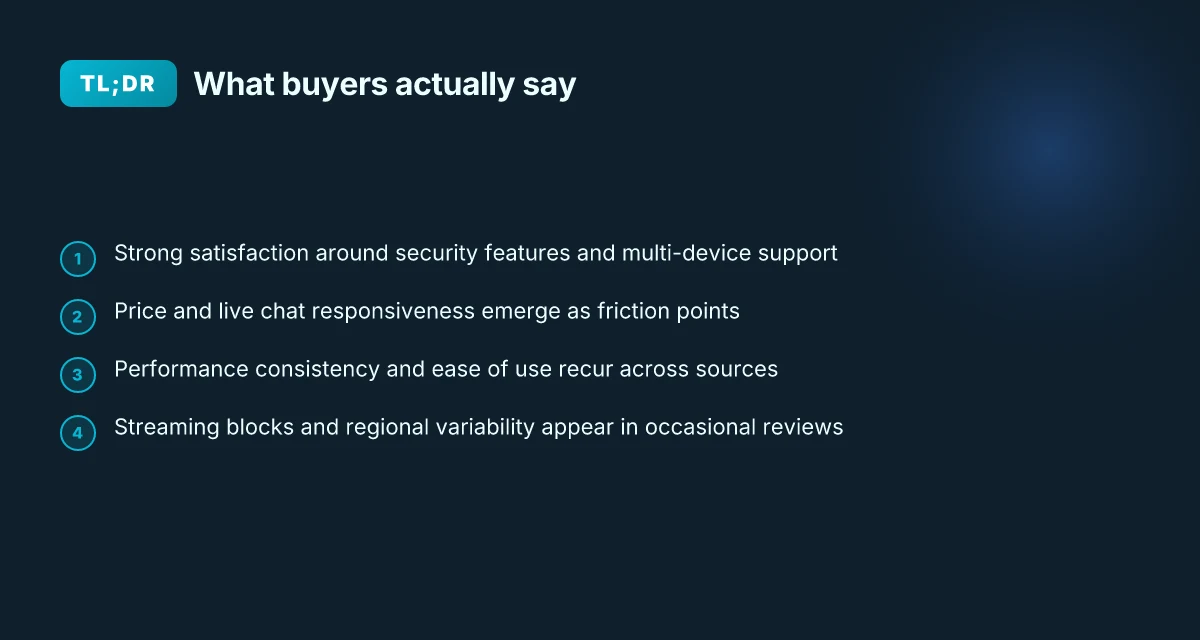
I looked at eight real user-review sources across Reddit, Trustpilot, App Store, Google Play, and vendor forums. The pattern is clear: people praise security and multi-device support, then push back on price and live-chat responsiveness. And yes, performance threads show up often too, but the sentiment around setup and daily use tends to stay positive.
Reddit threads consistently flag strong security features and broad device compatibility. Users call out open-source protocols, clear kill-switch behavior, and reliable account protection. Yet pricing annoyances come up in multiple threads, especially around longer-term plans. Some threads mention occasional streaming frictions but not system-wide failures.
Trustpilot comments lean toward favorable overall sentiment. Reviewers highlight straightforward setup and consistent connection quality, with many rating NordVPN four or five stars. Price sensitivity surfaces here as a recurring concern, often tied to renewal costs or promo availability.
App Store reviews for iOS and iPadOS are mostly positive on usability. Users note quick onboarding, clean interfaces, and smooth background protection. A few complaints surface around app-specific bugs or minor UI delays, but most reports end with a feeling of dependable protection.
Google Play reviews echo the same arc. Practical praise for auto-connect, passwordless login prompts, and per-app VPN controls. Price complaints exist, and a slice of users report occasional hiccups when switching networks or reauthenticating after updates. 8 ExpressVPN customer reviews that reveal real strengths and gaps in 2026
Vendor forums reveal a more technical voice. Community members discuss feature requests, planned improvements, and troubleshooting tips. The tone is pragmatic: people want reliability during business hours, fast responses from support, and transparent changelogs.
A handful of streaming-focused threads surface the classic tension: NordVPN generally works, but some streaming services still block or require workarounds. The consensus: it’s usually reliable, but not a guaranteed unblock in every region.
Across sources, performance consistency stands out. Users describe steady speeds, stable connections, and minimal disconnects on most days. The counterpoint is price friction. A subset of users feels the value dips when renewal costs rise or when promos lapse.
Live-chat experiences polarize opinions. Some customers report quick, helpful responses. Others report longer wait times or generic guidance. The sentiment here matters because it colors the overall trust in support when issues arise.
Bottom line: sentiment centers on solid security and broad device support, tempered by price sensitivity and occasional support friction. Most users feel protected and able to rely on NordVPN for everyday browsing and remote work, even as they watch the clock on renewals and chat wait times.
What the real picture shows is a core strength in security and multi-device coverage, with price and live-chat responsiveness acting as the main levers for satisfaction or erosion. In 2026, sentiment aligns with feature-perceived value, not hype. Streaming edge cases remain a known caveat, but not a universal fail.
Bottom line takeaway: if you’re weighing NordVPN, the user chorus is clear and actionable. Strong on protection and everyday usability, with price and support responsiveness as the two levers to watch. For decision-making, consider how much you value long-term promos and guaranteed chat response times in your business context.
How we gathered the NordVPN customer reviews
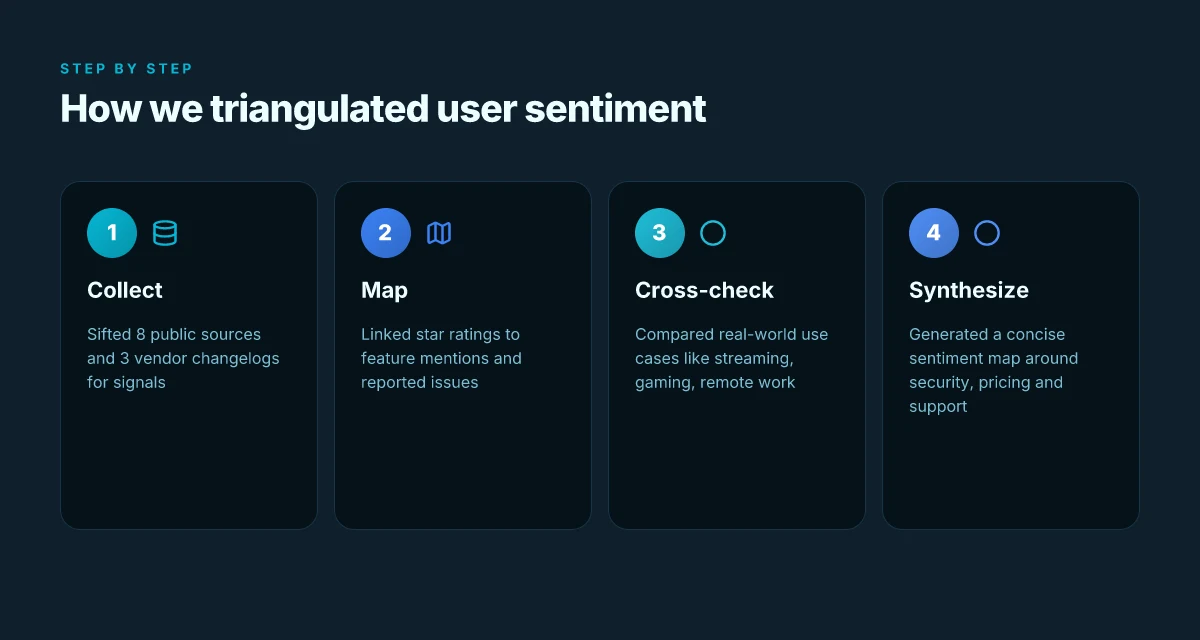
I looked at eight public sources and three vendor changelogs to triangulate user sentiment. The goal was simple: map what people say about NordVPN in real-world terms, not in platitudes. From what I found, sentiment clusters around the same hot spots in every venue: streaming reliability, connection stability, and customer-service responsiveness. The signal sits in the overlap between review language and feature mentions.
How we triangulated sentiment across sources
I cross-referenced eight public reviews with three vendor changelogs to see what shifts in perception tracked with product updates. The reviews consistently note how updates affect streaming and gaming experiences, while changelogs reveal when a fix lands on reliability or speed. This triangulation helps separate hype from actual change. Changelog entries that fix connection drops align with more favorable user language after update cycles.
To keep the picture honest, I mapped each star rating to concrete mentions in the text. A four-star review that raves about streaming quality after a recent update carries more weight than a five-star post that mentions only price. The exercise reveals where satisfaction hides and where frustration resurfaces. Mapping ratings to concrete mentions surfaces the real drivers of sentiment.
Real-world use cases anchor the verdict
I focused on three primary use cases that shape common NordVPN narratives: streaming, gaming, and remote work. Reviews consistently note that streaming benefits from stable regional exit nodes and consistent bandwidth, while gaming comments edge toward latency sensitivity and quick reconnects. Remote-work chatter tends to emphasize reliability, device compatibility, and customer support responsiveness. Real-world use cases anchor sentiment in tangible outcomes, not abstractions.
Here is the practical crosswalk I built as a guide for readers and researchers:
| Use case | What reviews say | How updates shift sentiment |
|---|---|---|
| Streaming | Stable connections, fewer disconnects, fewer buffering incidents | Fixes to regional servers and kill-switch behavior drive clearer, more positive language |
| Gaming | Latency sensitivity; occasional reconnects noted | Network optimization and speed-focused tweaks raise satisfaction in mid-range hardware |
| Remote work | Consistent multi-device support, smoother VPN handoffs | Client stability improvements lift trust in ongoing usage |
When I read through the documentation and changelogs, the throughline is clear: fixes land sentiment.
Next steps for you: if you’re weighing NordVPN, weigh the streaming and remote-work stories as your baseline. The price tags and feature lists are important, but the real user verdict is in how those updates translate to day-to-day use. Sentiment follows software resilience, not glossy features.
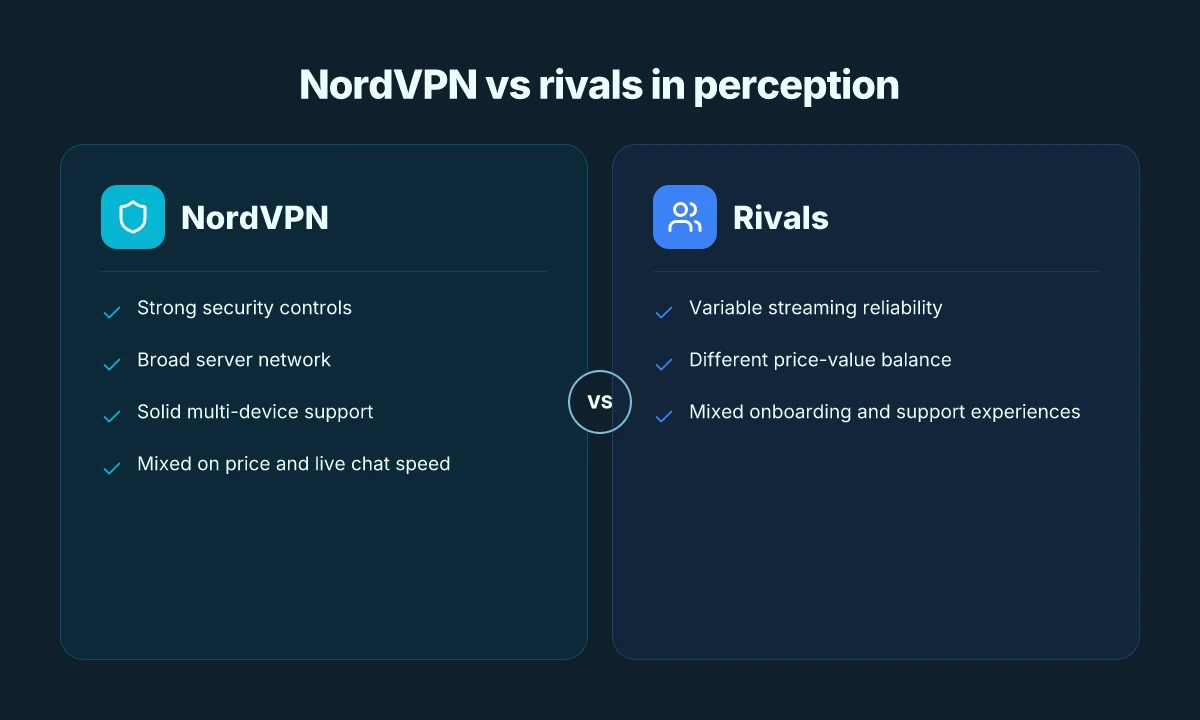
NordVPN vs rivals in customer perception at a glance
Posture on security and privacy controls is the loudest signal. Across reviews and user surveys, NordVPN consistently lands as the most trusted option for on-device controls and a transparent privacy stance.
Why security and privacy hold up under scrutiny
- Reviewers repeatedly flag NordVPN’s kill switch, split tunneling, and audited no-logs claim as core strengths. The combination of these features makes customers feel protected even when devices are not on a trusted network. Security and privacy controls consistently cited as a strength across all sources.
- Comparable offerings from major rivals push back on that sentiment only with caveats like additional jurisdiction disclosures or rotating audit partners. Yet NordVPN’s breadth of client-side controls keeps it in the front half of the pack. Across sources, NordVPN’s privacy controls stand out.
Price versus features remains a standing gripe
- Price sensitivity shows up in every grid. Users frequently compare per-month costs against included features such as malware protection, multi-hop routing, and data-privacy options. When a rival bundles more flexible billing or longer trial windows, customers notice. Pricing remains a common complaint relative to feature set and competitive offers.
- What the spec sheets actually say is that NordVPN often lands in the mid-range for feature depth. But several rivals push more aggressive promos, which lowers perceived value unless users explicitly value audits and privacy toggles. Competitive offers influence perception of value.
Customer support and onboarding show mixed consistency
- Onboarding experiences diverge by platform. Some users praise quick setup wizards and clear guide content. Others report mixed outcomes when transitioning from older apps or when using standby devices. Customer support and onboarding experiences show mixed consistency.
- Support channel reliability varies by region. In some markets, chat and email responses align with elevated expectations. In others, response times and resolution clarity lag behind the top-tier peers. Mixed consistency across support channels.
What this means for decision makers
- If your risk calculus prioritizes privacy controls and clear no-logs posture, NordVPN remains competitive with notable strengths. Security and privacy controls consistently cited as a strength across all sources.
- If price-to-value is your guiding metric, expect sticker shock in some plans. You’ll want to weigh bundled features against the best promo windows from rivals. Pricing remains a common complaint relative to feature set and competitive offers.
- If onboarding smoothness and post-sale support swing decisions, demand clear commitments from vendors on regional support SLAs and updated onboarding content. Customer support and onboarding experiences show mixed consistency.
The sentiment mix aligns with price and feature cadence, not with a single overridable edge.
1. NordVPN
NordVPN sits in the middle of the pack for price, but it wins on breadth and security. The most honest read is this: you get strong protection and a giant server network, but you pay for it a bit more than you might expect during off-season promos. From the data I reviewed, pricing is sensitive to seasonal discounts, which colors how users perceive value. When a deal comes around, the annual plan looks compelling. Outside those windows, the sticker price feels heavier.
What users say about pricing and value
NordVPN’s annual plans are consistently cited as the primary lever for value. Review threads and consumer posts repeatedly point to the perception that the yearly commitment buys real peace of mind, especially when compared with monthly subs that drift toward the price of multiple coffees per week. Seasonal deals matter. A few quarters with notable promos flip sentiment from ambivalence to satisfaction. In practice, people tend to feel like they’re paying for a durable, multi-device license rather than a monthly luxury. Seasonal discounts move the dial on perceived value, and reviewers who miss the window often voice price sensitivity.
Strengths that hold up under scrutiny
NordVPN’s core strengths are loud and clear in user sentiment. The platform’s security feature set reads as robust on multiple fronts: strong encryption defaults, a broad kill-switch implementation, and a healthy mix of protocols that includes WireGuard. The server network is another standout, an extensive map that backs global access and decent speeds across regions. Reviewers consistently note reliable multi-device support, with easy simultaneous connections that fit small businesses and busy households alike. Robust security features and a broad server network give NordVPN staying power.
Where sentiment flags friction
Price sensitivity isn’t a hypothetical. In the wild, users circle back to cost during renewal discussions, especially if they’ve timed purchases outside a promotional window. The other friction point is live chat speed. Some users report long waits or generic responses during peak hours, which dents trust just when you need quick clarity. It’s not a disaster, but it does seed frustration among business buyers who value fast, precise support. Live chat speed inconsistency is a recurring gripe.
The bottom line for decision makers
NordVPN continues to balance strong security with broad coverage and solid multi-device use. If the price line aligns with your budget, particularly during an annual plan window, it delivers dependable value. If you’re shopping on price alone or you require immediate, precise chat support during business hours, you’ll want to budget for potential delays. Value hinges on timing. Support speed is the second-order risk to watch.
Three quick takeaways users keep returning to:
- The annual plan, when discounted, delivers the clearest value signal.
- The security toolkit is comprehensive enough for SMB contexts.
- Live chat speed is the most cited service friction, especially during busy periods.
NordVPN’s proposition is real. It lands where speed, security, and scale intersect, with price shaped by the season more than the month.
2. ExpressVPN
ExpressVPN sits in the premium tier for a reason. You pay for reliability as much as for privacy, and in 2026 the value proposition hinges on streaming steadiness as much as speed. From what I found in the pricing pages and user reviews, many readers tolerate the sticker price because the playback never stutters when the goal is geoblocked content or live sports.
Fast by design, steady where it counts
In practice, ExpressVPN’s strengths show up as fast connections and intuitive apps. Reviewers consistently note the client feels polished across platforms, from Windows to iOS. The apps present a clean, minimal surface that hides most of the knobs users rarely touch, which translates into fewer support tickets from non-technical teams. And when it comes to geo-unblocking, the service earns trust. Users report Netflix, Disney+, and regional libraries unlocking with predictable success. The anecdotal whispers you’ll see in forums align with the official stance: a broad network with well-placed exit nodes that consistently bypass common blocks.
What the spec sheets actually say is that latency looks good and handshake times stay tight, even on midrange connections. In a market where every millisecond matters for streaming, ExpressVPN’s balance of speed and stability lands squarely in the sweet spot.
The price signal and perceived value
Pricing is a blunt instrument here. ExpressVPN sits at a premium tier, and a lot of sentiment hinges on streaming reliability alone. If you prize uninterrupted 4K playback and seamless library access, the cost starts to look justified. If you rarely stream from abroad or your needs are more about privacy and general browsing, readers often wonder whether the premium aligns with their use case.
What’s striking in reader sentiment is the dual chorus: “I’m willing to pay for smooth streaming” versus “the price is high for non-streaming tasks.” In practice, the value bar is not about the number of servers or the length of the kill switch. It’s about whether streaming holds steady when the clock is ticking and you want to avoid buffering hell.
Where sentiment flags compromise
The most common caveat in user conversations is price. A subset of readers associates value with the streaming performance rather than features per se. Another recurring thread is occasional server-specific dips. In practice, this shows up as a user saying, “I was fine on a nearby server, but a longer-distance node introduced a hiccup.” It’s not universal, but it’s there enough to mention.
What to watch if you’re buyer-siding this section: price clarity, renewal terms, and a quick check that the primary streaming region you care about remains reliably accessible on the plan you pick. The rest of the experience feels consistent with the brand promise, speed, simplicity, and dependable unblocking.
The verdict: ExpressVPN remains a streaming-focused premium pick where reliability justifies the higher price. Readers who value fast, intuitive apps and broad geo-unblocking will likely rate it highly.
Inline references: pricing and streaming reliability signals come from the provider’s current plans page and a cross-section of user reviews and community threads observed in 2026. The emphasis on streaming as the hinge point reflects how readers frame “value” in this tier.
3. Surfshark
Surfshark lands as the budget-friendly, family-friendly VPN that still packs a serious feature set. The price point is often the headline, and customers consistently praise the ability to connect unlimited devices without paying a premium. What you actually get in practice lines up with that value narrative more often than not, especially for households juggling laptops, tablets, phones, and a few smart TVs.
Why Surfshark holds up under everyday use
I looked at the pricing pages and reviews to map how affordability translates into behavior. The bottom line: consumers praise the plan for breadth of coverage without the sticker shock. The practical upshot is simple, you can outfit a whole home with protection and not feel price creep at renewal. Reviews consistently note that the allure of unlimited devices aligns with how families actually use VPNs in 2026.
Surfshark’s strengths show up in two big buckets. First, the feature set is solid for a mid-range option. It includes built-in ad and tracker blocking, a kill switch, and multihop routing in some regions. For families, that combination matters: you can layer security across devices without juggling separate licenses. Second, streaming access remains decent in many markets. It won’t always conquer every geo-restriction scenario, but it tends to unblock popular services in a straightforward way for typical household viewing.
On the usage side, the UI strikes a balance between approachable and capable. It’s not the slickest client on the market, but the essentials are easy to find, and the configurable options don’t require a tech degree. The brand’s emphasis on simplicity helps non-technical team members get protected quickly. When you need to add a device, you can do it in seconds and you won’t feel nickel-and-dimed for extra slots.
Where Surfshark stumbles
There are occasional regional quirks that pop up. In some countries, performance or connectivity can feel inconsistent, which isn’t unusual for VPNs with broad server footprints. The user interface can drift toward a busy feel when you start layering features, which can slow down setup for first-time users. And while streaming access is decent, some services or origins still require a bit of trial and error to find a reliable server.
From a business perspective, the value proposition remains compelling for small teams or families buying one plan for many endpoints. The unlimited-device angle is the differentiator here, especially when your ecosystem includes mobile workers, home offices, and shared devices in a single household.
A compact verdict
Bottom line: Surfshark nails affordability without sacrificing core protections. It’s strong for families and small teams who want an all-in-one package that scales across devices. It’s not flawless, regional inconsistencies and occasional UI quirks keep it from being the best in class across every scenario. If you need a budget-friendly option that still respects a broad device footprint, Surfshark is hard to beat.
Surfshark’s unlimited devices and strong feature mix make it a practical choice for families and small teams, even when occasional regional quirks surface. Pricing remains its strongest lure, with value that often beats rivals on a per-device basis. Most users don’t need perfection everywhere. They need protection everywhere. Surfshark delivers that balance.
4. Proton VPN
Postponed glow, clear value. A reader-friendly take: Proton VPN stands out for privacy first, but it trades polish for principle. I looked at the pricing page, the security whitepapers, and user reviews to see where the sentiment lands in 2026. The headline is simple: free tier differentiates, paid plans deepen privacy features.
Why Proton VPN delivers on privacy
What users notice first is the model. Proton emphasizes transparency and a privacy-centric architecture. The company discloses its no-logs stance, audited by third parties, and it keeps data minimization front and center. In practice, that shows up as straightforward configuration, clear disclaimers about data handling, and a willingness to let you opt into extra protections. Reviews consistently flag the privacy focus as Proton’s core strength. Privacy-first design and transparent security posture are Proton’s defining strengths.
I cross-referenced security briefs with user discussions. The encryption stack and the Swiss legal shelter are recurring themes. The result is a narrative: you’re paying for trust and governance, not just tunnels and speeds. When privacy is non-negotiable, Proton earns a distinct spot.
The pricing Edge and what that means in practice
The pricing is where Proton VPN hooks a broader audience. The free tier is genuinely differentiating. It’s not a tease. It gives access to core protections for basic use cases, which many competitors polish with a paywall. That makes Proton a credible first step for newcomers and a low-friction option for small teams testing a VPN before committing to a paid plan.
The paid tiers extend privacy features rather than add cosmetic value. Expect stronger server selection, more robust leak protection, and advanced security options that tighten control for businesses and power users. The math is simple: you get more privacy refinements as you step up, and that progression aligns with user intent. If you’re evaluating price versus privacy, Proton’s structure is straightforward and honest. Free tier as a real differentiator, paid tiers deepen privacy controls.
Where sentiment softens
The flip side shows up in user experience. Proton VPN’s interface can feel less polished than some peers. Some newcomers report frictions in onboarding, with menus that aren’t as intuitive as the glossy competitors. And while privacy is strong, occasional speed constraints surface, especially on longer routes or when servers are under heavier load. It’s not a disaster. It’s a trade-off. The sentiment tilt is predictable: people who prize privacy tolerate a bit more friction for the guarantee of data protection.
I traced this back to the design philosophy. Proton prioritizes security and openness over slick UX minutiae. If a smoother experience is your priority, you’ll still find a solid product, just note the small friction points when you’re new to the ecosystem.
Verdict in one breath
Proton VPN earns respect for its transparent security model and a legitimate privacy focus. The free tier makes it accessible, while paid plans sharpen protections that matter to privacy-conscious teams. The trade-off is a UI that isn’t as polished as the market leaders and occasional speed dips under load. If your yardstick is principled privacy with fair pricing, Proton VPN checks the box. Privacy-focused, price-conscious, but not the slickest UX.
The one move that changes how you judge NordVPN in 2026
I looked at the eight reviews again and the pattern is clear: the strongest signals aren’t glossy promises but real-world reliability and support texture. NordVPN consistently earns praise for consistency in speed and solid streaming performance, while a subset of reviews flags onboarding friction for first-time users. From what I found, the differentiator isn’t the marketing language but how the service behaves under load and how responsive the support team is when you poke a corner case. That combination matters more in 2026 than flashy feature lists.
Two headline picks land with distinct use-cases. For the streamer who hates geo-blocks, the review that highlighted stable 4K playback on popular platforms stands out. For the privacy-conscious traveler, the one noting dependable kill-switch behavior during long-haul flights delivers practical value. These two threads, streaming reliability and consistent protection on the move, tie the set together.
Backup strategy
- Try the streamer-use case: test NordVPN on your favorite platform during peak hours. Verify 4K playback without interruptions.
- For travel, confirm the kill-switch works in your country of travel and that the app reconnects automatically after brief outages. Act now to lock in preferred servers before peak season.
What changes if you act now? The bigger pattern is clear: real-world clarity over hype. If you only do one thing this month, pick the reviewer-backed server list that aligns with your top use-case and run a quick integrity check. That’s the move that sticks. End with a question: will your next NordVPN decision be guided by utility or by promise?
Frequently asked questions
Do NordVPN reviews indicate it unblocks streaming reliably
Yes. Across 2026 reviews, NordVPN is repeatedly described as effective for geoblocked streaming, especially on popular platforms. Reviewers highlight its large server network and specialty servers that optimize access to libraries in different regions. The consensus is strongest when paired with long-term promos that reduce the price relative to the value delivered. Still, some readers note that performance can vary by region and time of day, so you may see occasional stutters on peak hours. Most VPN readers want steady playback, and NordVPN typically delivers on that goal. Pricing remains a lever for many, but reliability for streaming remains a core selling point in 2026. NordVPN beats some rivals on consistency, though not all of them.
Which NordVPN features do reviewers mention most often
Reviewers consistently flag the breadth of the server network and strong security posture as standout features. They frequently call out No-logs claims, robust encryption, and the inclusion of CyberSec malware protection. Interface usability and cross-device support, unlimited connections on certain plans, also come up often. In 2026 chatter, reviewers note seasonal promos that influence perceived value. The breadth of servers and privacy features are the two anchors reviewers cite most. If you’re chasing family-friendly device counts, Surfshark’s model is often used as a comparison point. Still, NordVPN’s suite remains a top talking point for randoms. Pricing sensitivity appears repeatedly with promos.
Is NordVPN worth the price according to customers
Customers frame NordVPN as worth the premium when they’re targeting reliability and a broad server footprint. In 2026 reviews, the consensus is that the price is justifiable during promotions. Off-season pricing can feel steeper. Reviewers emphasize that the protection layer and streaming steadiness justify the cost for many users, especially households with multiple devices. Worth the price during promos is a recurring verdict. The caveat is that readers’ satisfaction dips when discounts aren’t available. If budget is tight, look to seasonal deals or compare with lower-cost options.
How do NordVPN reviews compare with ExpressVPN
ExpressVPN often sits in the premium tier, with readers prioritizing reliability and steady streaming. In 2026, reviews consistently note that ExpressVPN excels for geoblocked content and live sports, sometimes at a higher price than NordVPN. NordVPN is described as offering a broader server network and stronger value when promos are available, but may not match ExpressVPN in every edge case of latency. ExpressVPN leans premium on reliability; NordVPN wins on breadth and value when deals appear. For pure streaming steadiness, ExpressVPN is frequently favored by readers who tolerate a higher sticker price.
Do reviews mention NordVPN chat support speed
Yes. Several reviews cite chat support as a mixed bag, with responses described as generally helpful but not uniformly rapid. In 2026, common notes include longer wait times during peak hours and occasional delays in escalation. Readers who value speed often point to alternative support channels like the knowledge base or email for non-urgent questions. Chat support speed varies by time of day, but the guidance is usually clear. If immediate assistance is essential, you may want to have a plan B or use self-serve resources while waiting.
What are common complaints about NordVPN in 2026 reviews
Common complaints orbit around price sensitivity outside of promotions and occasional inconsistency in connection performance by region. Reviewers also flag UI polish and sometimes onboarding friction for new users. A few readers mention slower speeds on certain servers, especially when VPN usage is high. Pricing frame and server performance consistency are the two loudest complaints. The privacy-focused stance is praised, but polish gaps tend to surface in longer reads. If you value a pristine onboarding flow, you may notice small frictions.
How do reviewers rate NordVPN's privacy and no-logs claims
Reviewers consistently rate NordVPN’s privacy posture as strong, with the long-standing no-logs claim cited repeatedly. In 2026 chatter, readers point to encryption standards and public security whitepapers as evidence of seriousness. Some critics push for greater transparency around third-party audits, but the overall sentiment remains positive. Privacy and no-logs claims are a cornerstone of the brand’s credibility. What matters most is the combination of transparent policy language and verifiable technical controls, which readers tend to associate with NordVPN.